






- EDITIONS:
 Spanish News Today
 Alicante Today
 Andalucia Today
PROPERTY SEARCH

The medieval Jewish quarter and synagogue in Lorca
The best-preserved 15th-century synagogue in Spain
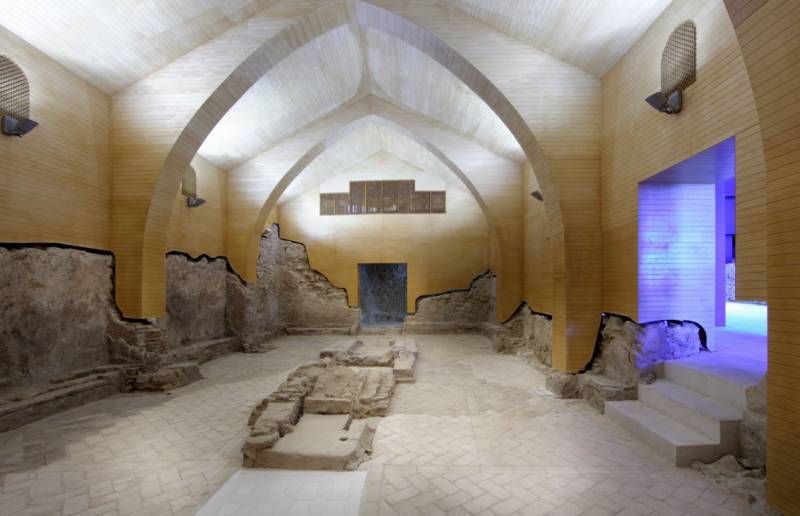
During construction work to build the Parador Hotel in Lorca the remains of the only known medieval synagogue within the Region of Murcia were discovered within the Jewish quarter inside the fortified walls of the Mediaeval castle. The synagogue is the only one known to exist in Spain which has not been re-used as a religious building following the tumultuous events of the 13th to 15th centuries, it being quite common to find, for example, a Christian church built on top of the site of a mosque following the Reconquista.
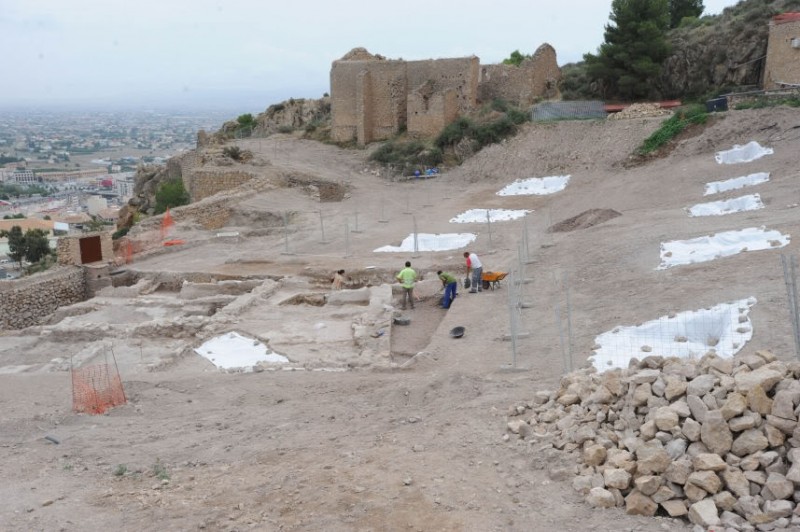
The synagogue in the Jewish Quarter of Lorca is exceptional because of its state of preservation and also because it offers important archaeological insights into this type of 15th-century building and the layout used.
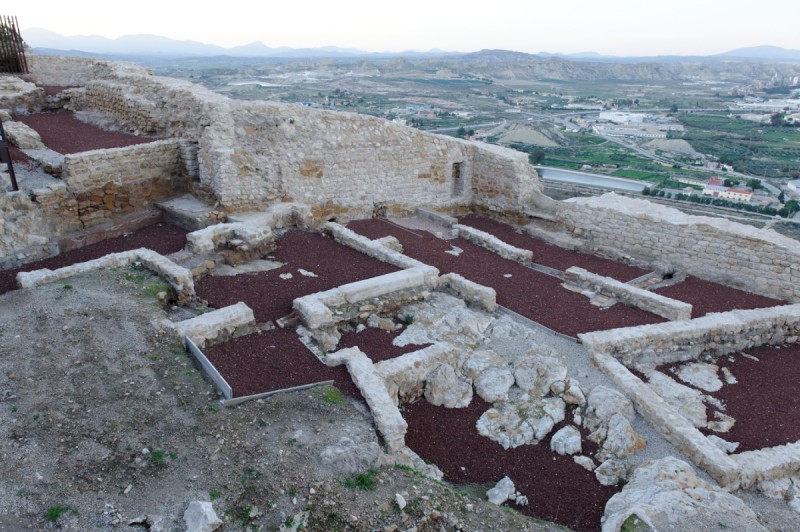
It is rectangular with two entrances which open on to a courtyard. One allows access to a foyer which houses a fountain once used for ablutions prior to prayer and this connects to a large meeting room surrounded by benches attached to the walls.
This room is the focal point for meeting and prayer and housed the holy ark (arón ha-qodesh) in which the Torah scrolls were kept on the eastern wall. Opposite this is the reading platform (bimá) and the space between the two is known as the Via Sacra. Above these is the women’s gallery (matroneum), which is accessed by a third entrance.
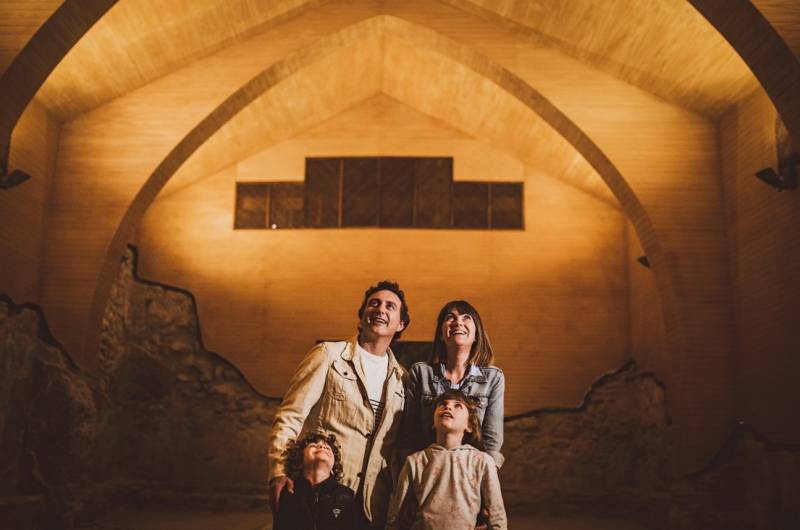
The upper areas of the building have been reconstructed using wood to enable visitors to fully appreciate the size and layout of the structure when it was in use.
The importance of the Jews in medieval Spain
The south of the Iberian Peninsula was occupied by Muslim invaders at the beginning of the eighth century and they remained in power across much of what is now Spain until many areas were conquered in the 12th and 13th centuries by the combined Christian forces of the Reconquista", leaving only the Kingdom of Granada in the hands of the Moorish rulers.
Jewish businessmen were an integral part of the life of most cities, bridging the gap between cultures in a vital trading role, and this was particularly important in a frontier city such as Lorca, which straddled important communications routes running along the Guadalentín Valley and coast.
Once Lorca was under Christian rule, defined districts were allocated to both Jewish and Muslim inhabitants who were dependent on the monarch, giving them direct and explicit "protection" in exchange for which they paid a special tax to the Crown.
As well as being, therefore, an important source of income for the royalty, this protection of ethnic minorities was justified in the face of the social exclusion they were subjected to on the part of the Christian church.
Unlike the Moors who remained in "reconquered" areas, most of whom were agricultural labourers, Jews found it both necessary and advantageous to live inside the city, protected within its walls and safe also under the watchful eye of the city council to carry out their financial transactions and commercial trading activities.
In 1243, Prince Alfonso of Castilla took this area, making Lorca a border city, and therefore, a place of strategic importance. He strengthened and reinforced the city and its walls, amplifying the former Moorish castle and converting it into a stronghold (medieval Murcia was a dangerous place, the border towns subject to frequent raids from the neighbouring Kingdom of Granada, and fierce skirmishes between Moors and Christians were a regular occurrence).
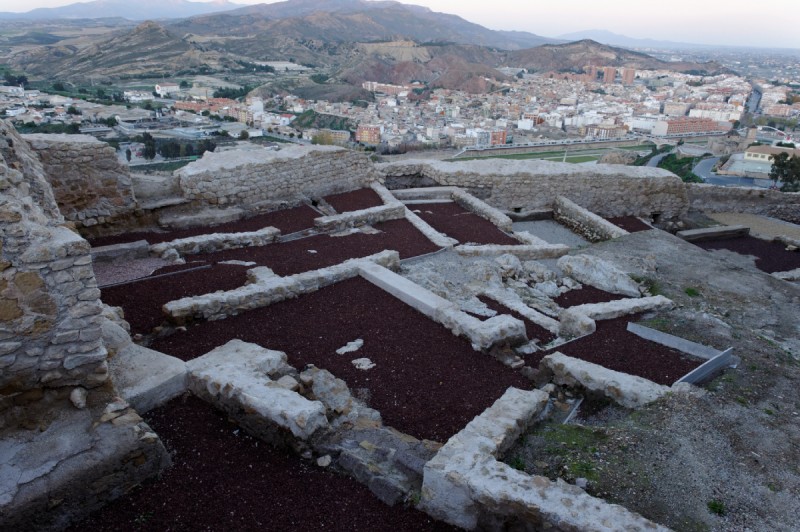
Although accepted as a part of life, the Jewish community was separated from the rest of the inhabitants and occupied their own quarter, which was known as the "judería" or "aljama". This area was clearly divided from the other quarters of the city by walls, and in the case of Lorca the Jewish quarter was within the walls of the citadel. Access to it was only through the Puerta del Pescado (the Fisheries Gate).
One of the aims of this physical separation of the different quarters of the city was to protect the Jews, but at the same time it also caused clear ethnic division within the community. It was made overtly clear that the "real" citizens of Lorca were the Christians, and the Jews were accepted as necessary but were not part of the everyday life or the decision-making processes of the city.
But they were an active community who brought considerable wealth to Lorca. They mainly earnt their living by craftsmanship and financial activity, and moved freely over the frontiers between kingdoms, making it possible for them to explore trading activities where Christians found it difficult.
The Jewish quarter was abandoned when the Catholic Monarchs, Isabella and Ferdinand, succeeded in uniting Spain, having first combined the two rival kingdoms of Castilla and Aragón through their marriage. This created a combined force powerful enough to defeat the last remaining Moorish rulers in Spain and take the kingdom of Granada in 1492.
They then expelled all Jews and Muslims from their kingdom: only those who converted to Christianity were allowed to remain. Many of the areas formerly occupied by these populations fell into disuse, and although in most cases the space was re-used, in Lorca the Jewish quarter was abandoned as the city extended sideways, spreading across the hillside outside of the fortified walls once the danger of a Moorish frontier had been removed.
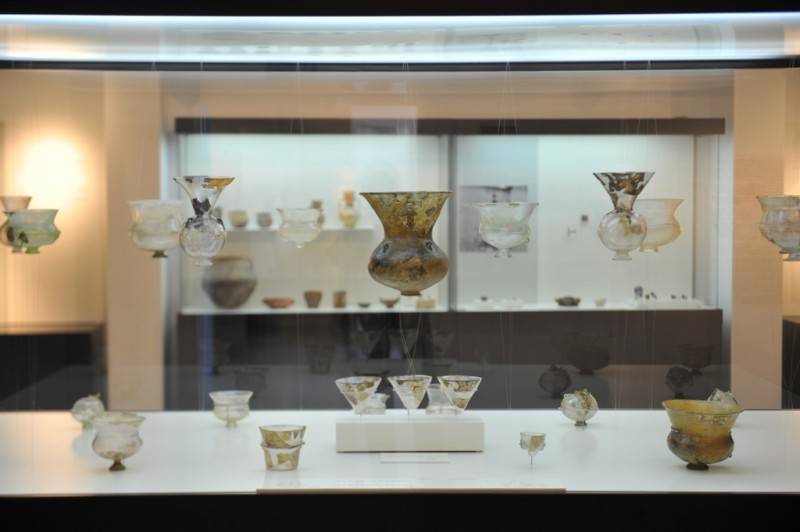
This site has yielded an extraordinary wealth of archaeological finds, including the remains of 20 glass lamps which once lit the synagogue, demonstrating that the site was abandoned in a hurry and never re-occupied.
These now have pride of place in the municipal archaeological museum.
Archaeologists have uncovered the large synagogue and eleven houses which open onto small squares with narrow streets and ramparts. The houses are of various sizes and are adapted to the slope of the area. Most have small patios, raised alcoves, platforms with workbenches attached to the walls, laundries, pantries, wardrobes, kitchens and, in many cases, a bathroom.
Council archives contain documents from the second half of the 15th century which give an insight into the people who lived in this Jewish Quarter and the types of office they held, mostly relating to trade but also including other activities inherent to a border town, such as tax collection and undertaking negotiations to recover captives in exchange for a ransom.
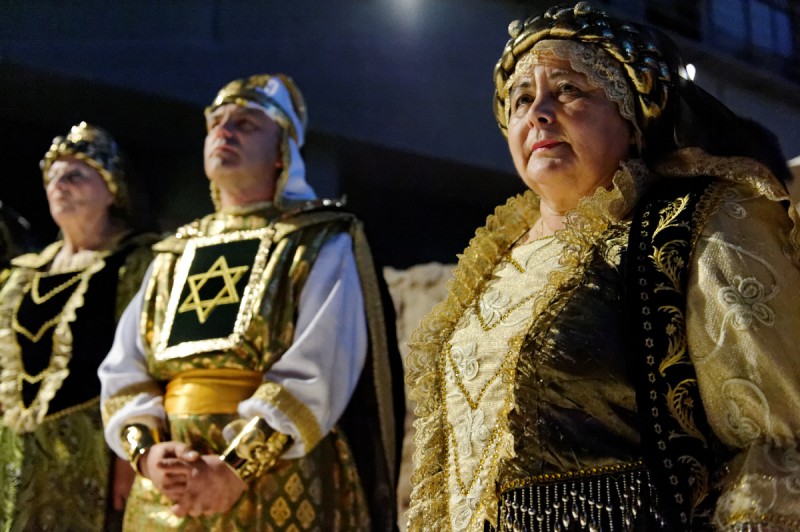
In December 2012 the former synagogue hosted the ceremony to light the first candles of Hannukah, the Festival of Light, the first time this had taken place in the castle for 520 years, and this is now an annual event.
Visits can be arranged to the Jewish quarter as part of a tour of Lorca castle, and tours of the Judería also take place regularly throughout the year within the programme of activities of the Lorca Taller del Tiempo organisation. Click here for online bookings of activities, events and visits at the castle and other locations in Lorca.














Cartagena
El Carmoli
Islas Menores and Mar de Cristal
La Manga Club
La Manga del Mar Menor
La Puebla
La Torre Golf Resort
La Union
Los Alcazares
Los Belones
Los Nietos
Los Urrutias
Mar Menor Golf Resort
Pilar de la Horadada
Playa Honda / Playa Paraiso
Portman
Roldan and Lo Ferro
San Javier
San Pedro del Pinatar
Santa Rosalia Lake and Life resort
Terrazas de la Torre Golf Resort
Torre Pacheco
Aledo
Alhama de Murcia
Bolnuevo
Camposol
Condado de Alhama
Fuente Alamo
Hacienda del Alamo Golf Resort
Lorca
Mazarron
Puerto de Mazarron
Puerto Lumbreras
Sierra Espuna
Totana
Abaran
Alcantarilla
Archena
Blanca
Corvera
El Valle Golf Resort
Hacienda Riquelme Golf Resort
Lorqui
Molina de Segura
Mosa Trajectum
Murcia City
Peraleja Golf Resort
Ricote
Sucina
Condado de Alhama
El Valle Golf Resort
Hacienda del Alamo Golf Resort
Hacienda Riquelme Golf Resort
Islas Menores and Mar de Cristal
La Manga Club
La Torre Golf Resort
Mar Menor Golf Resort
Mazarron Country Club
Mosa Trajectum
Peraleja Golf Resort
Santa Rosalia Lake and Life resort
Terrazas de la Torre Golf Resort
La Zenia
Lomas de Cabo Roig
CAMPOSOL TODAY Whats OnCartagena SpainCoronavirusCorvera Airport MurciaMurcia Gota Fria 2019Murcia property news generic threadWeekly Bulletin