


- EDITIONS:
 Spanish News Today
 Alicante Today
 Andalucia Today
Annual Feria and September fiestas in Calasparra
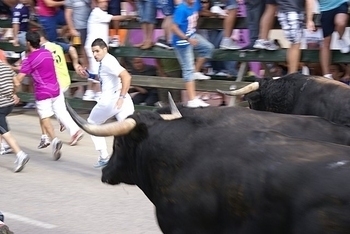
The festivities includes a folk dancing festival, a Romería and bull running
The fiestas run from 25th August to 9th September
The September celebrations in Calasparra are in fact three events rolled into one, with a religious core, a traditional autumn fair and a "Romería" all taking place within the same week as the heat of summer dies down.
The Fiestas of the Santos Mártires San Abdón and San Senén
The main religious celebrations of the patron saints take place in July and originally the events which accompanied them, including bull running, were held alongside them. However, the two parts were separated in the 19th century and held at different times of the year, mainly due to the heat of summer.
The Feria
The autumn "feria" centres around the age-old traditions of livestock fairs dating back to medieval times. After the heat of summer, cattle farmers would bring their livestock down to the fairs for sale, and the events grew into sociable occasions with entertainment, music and plenty of other goods and services on offer for the duration. Murcia has a number of livestock fairs in September, and this one in Calasparra focuses on the two great obsessions of the area: rice and bullfighting.
The Feria begain in the 19th century, when the council were trying to revitalise the economy following economic recession, merging the religious celebrations of the two patrons with the livestock sales.
Nowadays there is no livestock fair and bull-related events have become the core element of the week, with the "encierros" or bull runs attracting more spectators than any other. These take place at 10.00 every morning for the duration of the six days of the bullfights.
They are similar to those in Pamplona, but not on such a dangerous course. At 10.00 the bulls which will be participating in the evening events run a 1-km course through town, with the young bloods running in front of them. It's over in about 5 minutes and is televised for those who would rather enjoy the safety of home than risk being in the streets: people do get injured, normally because they trip or become over-confident.
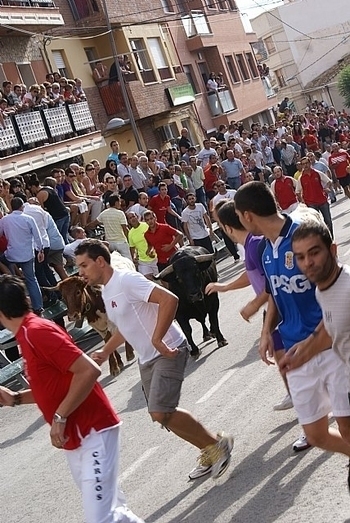 While many expats are offended by any coverage relating to bullfighting, its very difficult to separate the Feria from the bulls as there is such a strong following in the north-west of the Region of Murcia. Nearby Caravaca and Cehegín both have busy bullrings and the bullfights during this week are invariably sold out.
Alongside the bullfights is the "Recinto ferial" at the end of Gran Vía, with a tapas route, rice dishes and plenty of beer on sale, and the inevitable stalls which accompany the Ferias, as well as fairground and musical entertainments.
Romería of the Virgen de la Esperanza
The Virgen de la Esperanza has been venerated in Calasparra since the early 17th century, and although she was brought down into the town sporadically over a period of several hundred years, this Romería in her honour didn´t begin until the early 20th century. She was named Patron of the town in 1840.
The Romería de la Esperanza is always celebrated on the evening of 7th September with the main religious events on the following day.
Cartagena
El Carmoli
Islas Menores and Mar de Cristal
La Manga Club
La Manga del Mar Menor
La Puebla
La Torre Golf Resort
La Union
Los Alcazares
Los Belones
Los Nietos
Los Urrutias
Mar Menor Golf Resort
Pilar de la Horadada
Playa Honda / Playa Paraiso
Portman
Roldan and Lo Ferro
San Javier
San Pedro del Pinatar
Santa Rosalia Lake and Life resort
Terrazas de la Torre Golf Resort
Torre Pacheco
Aledo
Alhama de Murcia
Bolnuevo
Camposol
Condado de Alhama
Fuente Alamo
Hacienda del Alamo Golf Resort
Lorca
Mazarron
Puerto de Mazarron
Puerto Lumbreras
Sierra Espuna
Totana
Abaran
Alcantarilla
Archena
Blanca
Corvera
El Valle Golf Resort
Hacienda Riquelme Golf Resort
Lorqui
Molina de Segura
Mosa Trajectum
Murcia City
Peraleja Golf Resort
Ricote
Sucina
Condado de Alhama
El Valle Golf Resort
Hacienda del Alamo Golf Resort
Hacienda Riquelme Golf Resort
Islas Menores and Mar de Cristal
La Manga Club
La Torre Golf Resort
Mar Menor Golf Resort
Mazarron Country Club
Mosa Trajectum
Peraleja Golf Resort
Santa Rosalia Lake and Life resort
Terrazas de la Torre Golf Resort
La Zenia
Lomas de Cabo Roig
CAMPOSOL TODAY Whats OnCartagena SpainCoronavirusCorvera Airport MurciaMurcia Gota Fria 2019Murcia property news generic threadWeekly Bulletin